
Pirate Shipwreck Off the Coast of Cape Cod Sets the Historical Record Straight on West African Gold
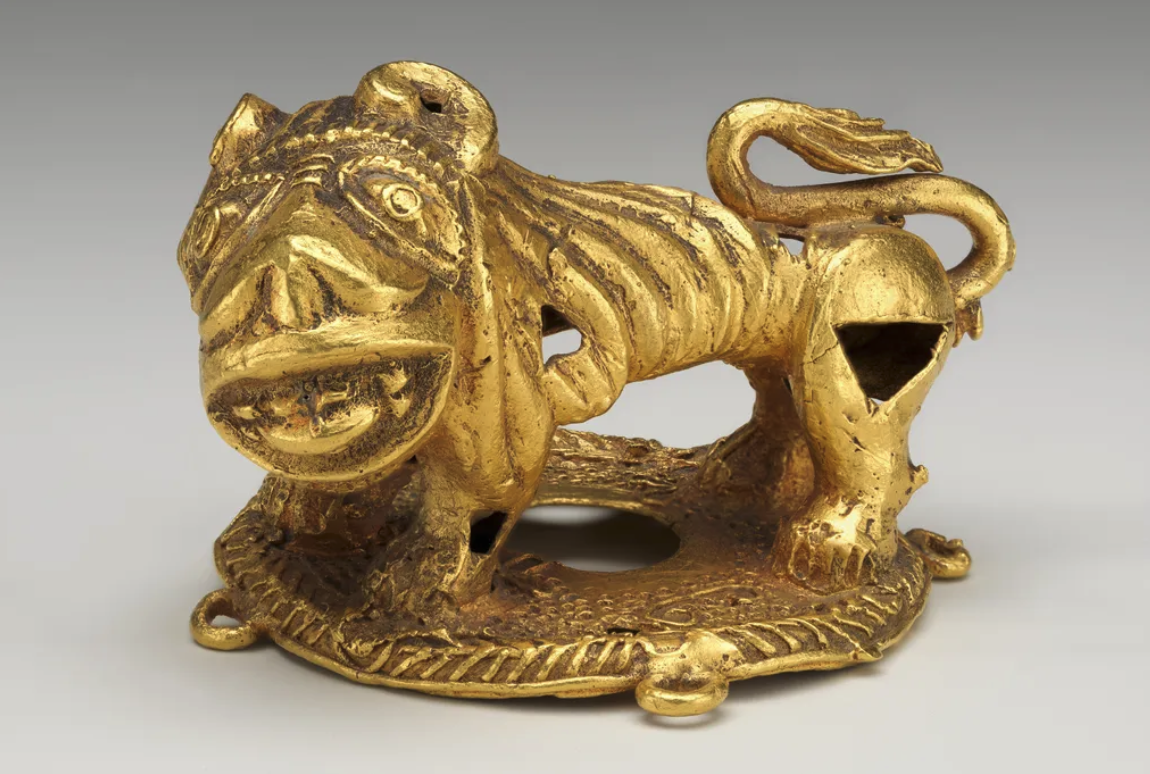
A gold ornament of a lion created by an Akan artist Metropolitan Museum of Art
Europeans spread rumors about degraded gold from their Akan trade partners. A new analysis of artifacts from the “Whydah Gally” shipwreck tells a different story
When the Whydah Gally shipwreck was discovered in 1984 off the coast of Cape Cod, scientists and historians studied its artifacts to update historical narratives about 18th-century transatlantic trade. New research about the ship’s bounty, published last month in the journal Heritage Science, corrects what its authors consider an old myth: the belief that West African traders “passed off adulterated materials of lesser value as high-karat gold.”
“The accusations of systematic fraud that Europeans wielded for generations to justify their distrust of African traders now confront scientific evidence,” writes Guillermo Carvajal for La Brújula Verde.
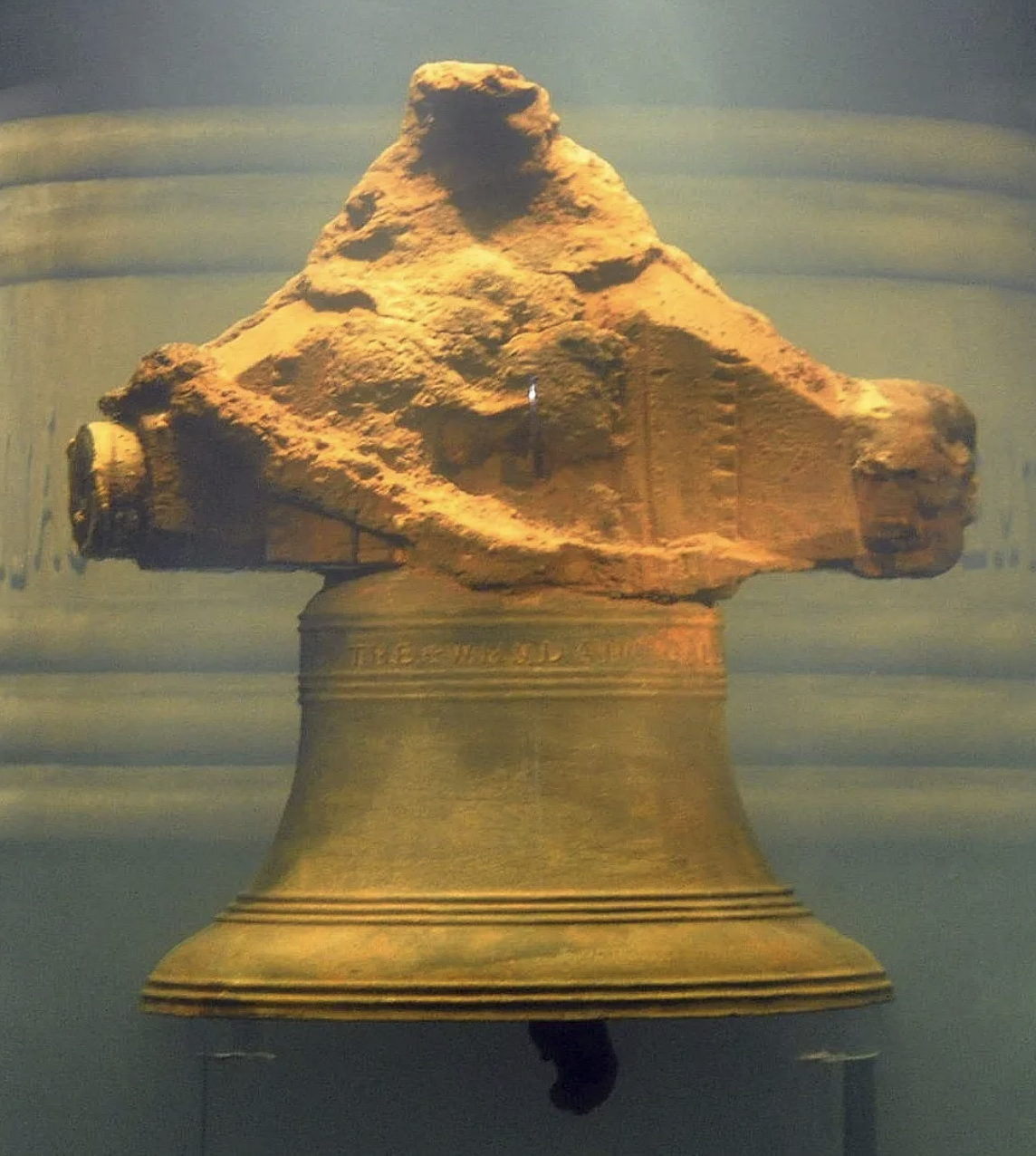
The bell from the shipwrecked Whydah Gally jjsala via Wikimedia Commons under CC BY-SA 2.0
In early 1717, near the Bahamas, the infamous pirate Samuel Bellamy captured the Whydah Gally, an English slave ship traveling from Jamaica to London with a cargo of spices, dyes, rum and precious metals. Soon after, Bellamy and his crew were caught in a storm off the Massachusetts coast. The ship sank, killing most of the crew and scattering the bounty on the ocean floor.
More than 200,000 artifacts have been recovered, providing an unparalleled window into the era’s trade in commodities—and human beings.
“The Whydah was a pirate ship but also a slave ship, tied directly to the economies and injustices of its time,” writes Brandon Clifford, the underwater archaeologist who discovered the shipwreck and the executive director of the Center for Historic Shipwreck Preservation, for the Explorers Club.
In the wreckage, archaeologists found more than 300 gold items crafted by the Akan people of West Africa, who exchanged goods with Europeans. In trade records and correspondence, these traders accused the Akan of melding their gold with materials of lesser value—such as bronze, iron or even sand—to dilute the gold’s value while selling it at the same price. According to the new Heritage Science study, one trader advised his European contemporaries of ways “to guard against fraud and adulteration of the gold.”
The Akan gold that sank with the Whydah Gally, however, tells a different story. Researchers used a specialized X-ray to determine the composition of about two dozen samples and found that each item was between 73.5 and 96.7 percent gold. Other elements present included silver, copper, iron and lead—similar to the makeup of raw gold ore deposits found in the Ashanti Gold Belt, the source of Akan gold.
“It’s not 100 percent gold ore that you find,” lead author Tobias Skowronek, a geochemist at the University of Bonn in Germany, tells the New York Times’ Katherine Kornei. The finding suggests that rumors about West African traders habitually cheating European buyers are “nonsense,” he adds.
The study’s authors caution that these results offer insight into a brief period of a trade network that spanned hundreds of years. The 1700s saw shifts in the West African gold trade, as new gold deposits in Brazil flooded the markets. The research team notes that future studies will test samples of South and Central American gold and silver to see if the Akan people had access to it when crafting artifacts for trade.
“The early 18th century was a period of sociopolitical and socioeconomic change on the coast,” the researchers write, “which included the growth of an African merchant class and formation of the Asante Kingdom.”
Source: smithsonianmag.com. Ryley Graham