
US Navy signs contract to finish last Zumwalt-class destroyer
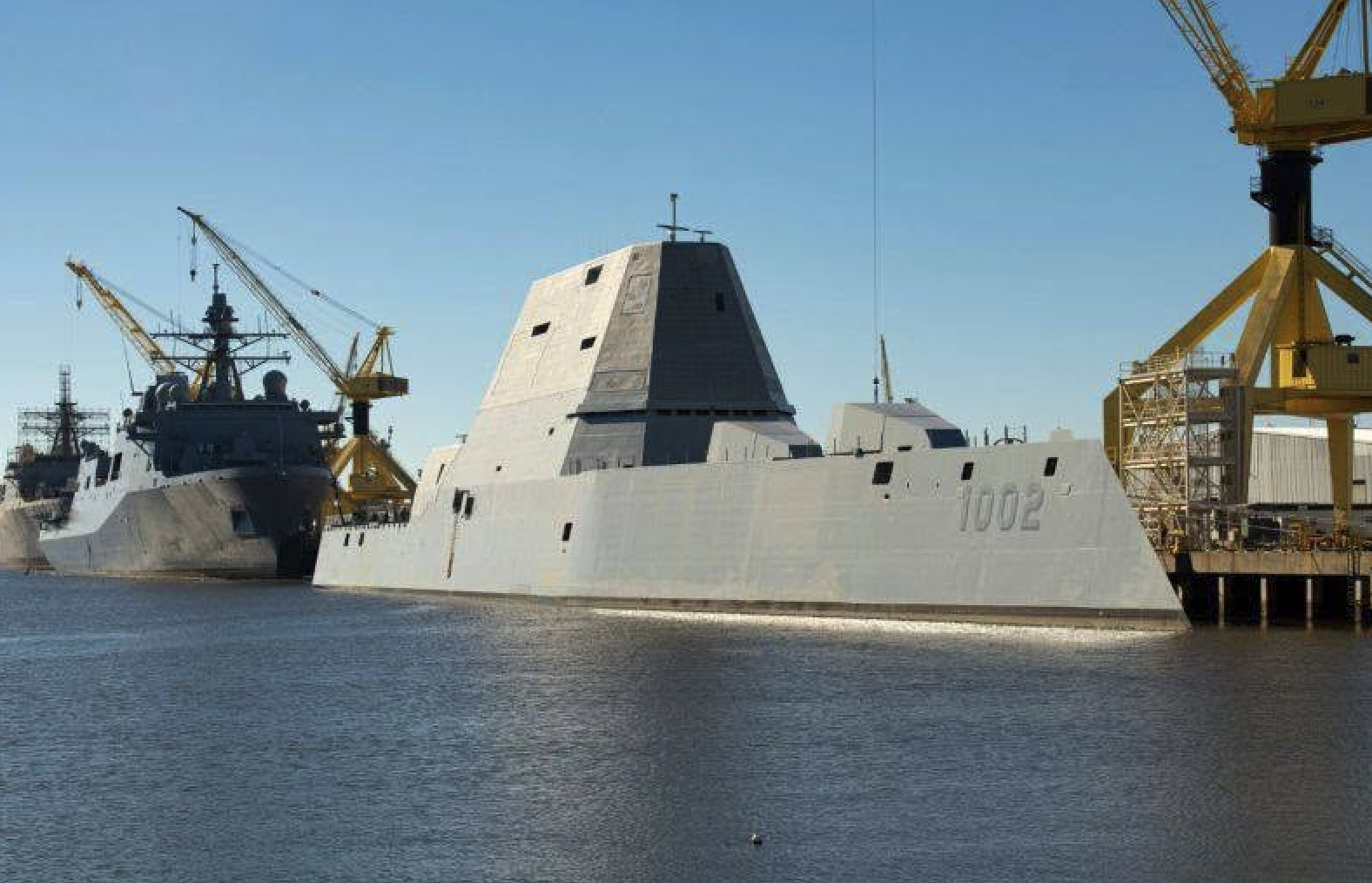
The Navy approved a $99 million contract with Ingalls Shipbuilding on Oct. 19 to complete and sea-test USS Lyndon B. Johnson, the third and final Zumwalt-class destroyer. Originally planned in the 1990s as a potential successor to Arleigh Burke-class destroyers, the Zumwalt program faced design and cost issues, as well as shifting Navy strategic priorities that led the service to cut the originally planned order of 32 ships to just three.
The keel was laid for the first ship, USS ZUMWALT (DDG-1000), in November 2011, and the ship was commissioned in October 2016. The second ship, USS MCHAEL MONSOOR (DDG-1001), had its keel laid in May 2013 and was commissioned in January 2019.The yard laid the keel for the USS LYNDON B. JOHNSON (DDG-1002) in January 2017. But nearly 10 years later, it has not been commissioned into the fleet, according to the official Naval Vessel Registry.
Brian Blanchette, the president of Ingalls Shipbuilding, said the yard will aim to prepare the ship to turn over to the Navy by next year. “Our shipbuilders are proud to help deliver DDG 1002 and prepare her for future fleet operations,” Blanchette said in a statement.
At just under 16,000 tons, the Zumwalt-class surface combatant has nearly twice the displacement of the Arleigh Burke-class destroyers, but its wider hull and shorter draft allow more operations in coastal waters.Zumwalt-class guided-missile destroyers feature an integrated electric propulsion system that generates a significant increase in electrical power. The futuristic design includes an enclosed superstructure with stealth features that reduce its radar signature to other ships. The ship has a “tumblehome” hull, in which the sides of the ship slope inward above the waterline, making the overall deck narrower than the ship’s beam at the waterline.
The Navy had planned to arm each ship with two Advanced Gun Systems, which could fire a new 155mm, gun-launched, rocket-assisted projectile called the Long-Range Land-Attack Projectile (LRLAP). The guns could be used to support ground troops with naval fire. In November 2016, the Navy ended procurement of LRLAP projectiles because of high costs.
In 2017, the Navy shifted the role of the Zumwalt destroyers to surface strike missions, with plans to install four large-diameter vertical tubes to fire the Navy’s new hypersonic Conventional Prompt Strike (CPS) hypersonic weapons system, according to a report from the Congressional Research Service. The Navy has modified Zumwalt, with plans to install the system on the other two ships.
“The Zumwalt class, with its advanced stealth design and integration of the Conventional Prompt Strike weapons system, will be the Navy’s premier offensive surface combatant,” Capt. Clint Lawler, the Navy’s Zumwalt-class program manager, said in January 2025 during the Surface Navy Association meeting.
The Navy reportedly is also increasing the range and fuel capacity of Zumwalt-class ships and wants to replace some combat-system equipment with versions that are more interoperable with existing systems on Navy ships, according to the CRS report.
Source : Stars & Stripes. Gary Warner