
From Hobart to the world: How a Tasmanian ferry business became a global electric shipbuilder
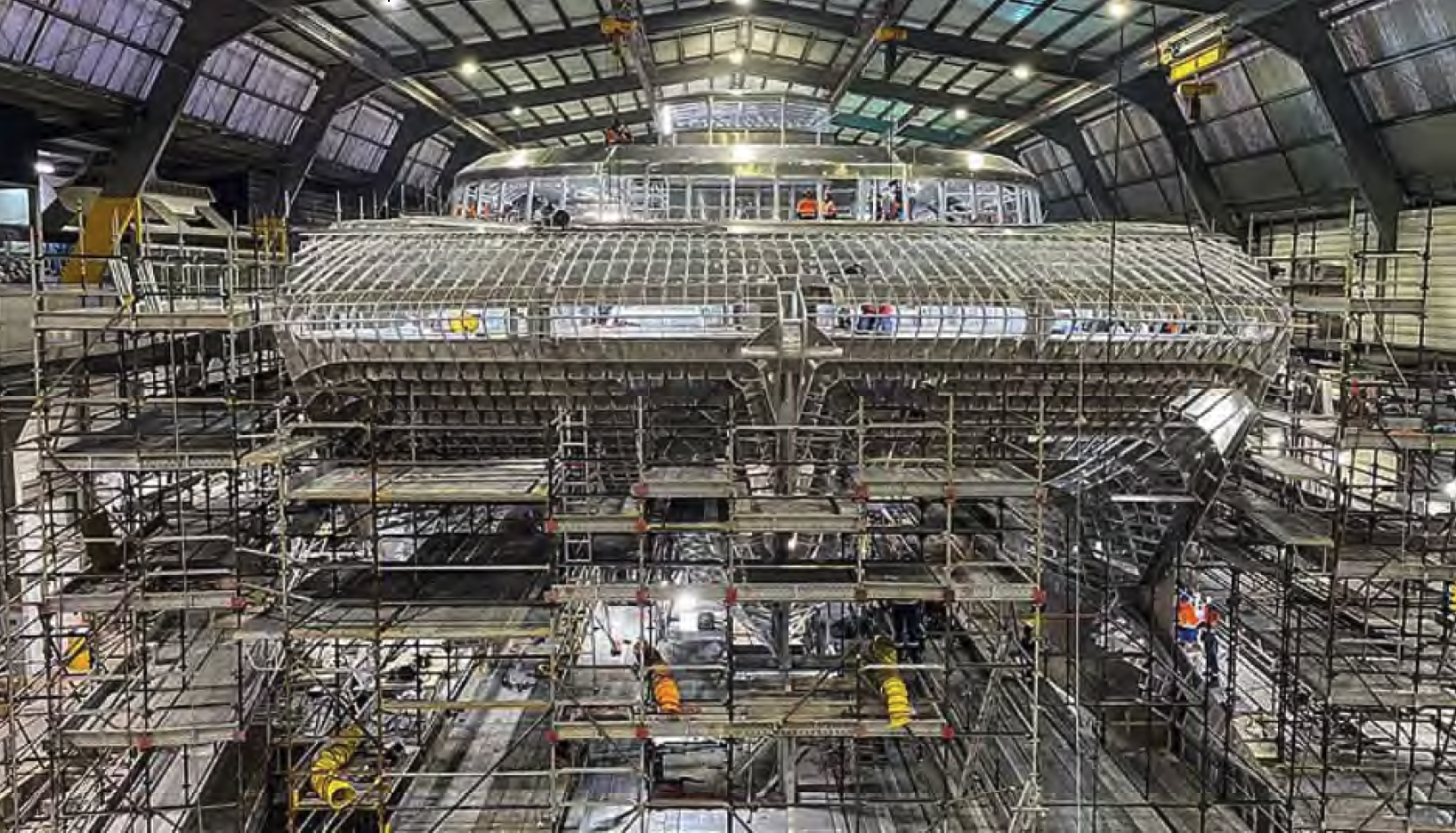
From its beginnings on Hobart’s Derwent River to building the world’s largest battery electric ship, Incat Tasmania has spent decades evolving its business and now it’s betting on an electric future.
Family-owned Tasmanian business Incat is taking on one of the biggest transformations in its history: building the next generation of large battery electric ships for the global market. The company has been designing and building high speed aluminium vessels in Hobart for more than 40 years, delivering around 100 ships to operators around the world.
Incat recently completed Hull 96, a 130m battery electric ship capable of carrying 2,100 passengers and 225 vehicles.Powered by more than 40 megawatt hours (MWh) of battery capacity, including around 260 tonnes of batteries, it is the world’s largest battery electric ship.
Three 129m fully battery electric ferries are now under construction at Incat’s Hobart shipyard for ferry operators in Denmark. When delivered, they will become Europe’s largest electric ferries.
For Incat founder and chairman Robert Clifford, the journey started on a much smaller scale. “I was a ferry operator many years ago when the bridge was knocked down by a government ship,” Clifford said. “And after the ferries were restored, and the bridge was restored,we kept on building ships. So, we’ve been building ships for the last 50 odd years.”Since 1977, Incat has developed a global reputation for high-speed, lightweight aluminium vessels. Mr Clifford believes that expertise has given the business an advantage as shipbuilding begins its transition towards electric power.“We've been leading the world with lightweight ships for many years, and lightweight ships are so important in today's age because a lightweight ship takes a lot less power,” he said. “The customer who needs the least electricity needs our ships.”
A new generation of shipbuilders
And there are more to come. That next generation extends beyond the Clifford family.
Electrical apprentice Lottee Mansfield grew up in Tasmania around boats and saw Incat as an opportunity to combine two interests. “I'm born and bred Tasmanian and obviously this company is,” Mansfield said. “I wanted to be a sparky and I love boats. I've been around boats my whole life. My uncle and my dad drive catamarans and I just thought this is the perfect place to learn my trade.” For Mansfield, one of the biggest moments of her apprenticeship came when Hull 96 left Tasmania for its journey overseas. “It was quite amazing to look on the TV and watch what I had worked on for a whole year and watch it travel overseas,” she said.“It was quite a proud moment to share with my family and say, ‘Look, I did those lights on there.’” Mansfield said being part of the move towards electric shipbuilding also made the work meaningful to her.“To be a part of something that's actually worldwide and is going to become very common, in the future of boat building, it's pretty amazing to be a part of that,” she said.
Why Incat is betting on electric
For Clifford, the shift to electric isn't simply about building a different type of vessel. He sees it as the direction the global ferry market is heading. “The world is going electric,” he said.“We're just trying to get the most bang for our buck if you like. The least expensive of all the fuels available is electricity and the least polluting. So, electricity makes sense.”
Hull 96 is the biggest demonstration of that ambition so far.
Its battery capacity is equivalent to more than 850 Tesla Model 3 electric vehicles, while eight electric motors can produce a combined 19,200kW of power - roughly equivalent to 24 Formula 1 cars. Clifford is well aware, innovation means Incat can't assume today's technology will remain the answer. “We have to keep our eyes on the ball, of course, because the market and the technology is changing so rapidly that what we're doing today isn't necessarily what we need to be doing in three or four years' time,” he said. “Batteries are improving all the time, electrical components are improving. So, we've got to keep up with it.”
Three generations building in Tasmania
While Incat's ships travel the world, they continue to be built in Hobart. The Clifford family is now into its third generation at the business. Robert's grandson, Incat project manager Sean Lowrie, said joining the company brought both a sense of achievement and the weight of family legacy.“My brother and I have been the third generation, and three cousins as well on my uncle's side,” Mr Lowrie said.“There's a lot to live up to, but it's pretty amazing what Pop and the Incat team have built.
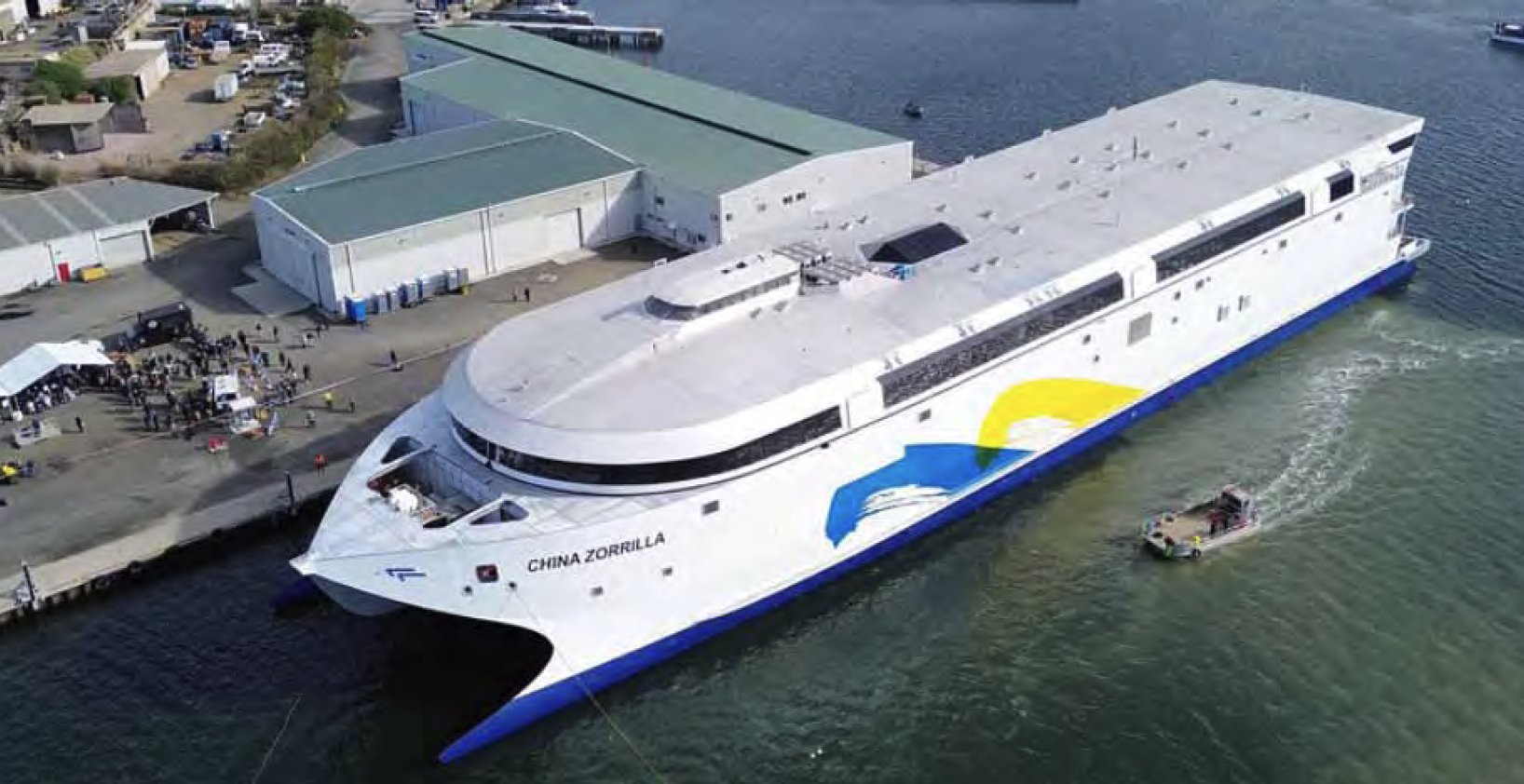
Hull 096, the world's largest battery-electric ferry. A 130-metre battery-electric flagship for Buquebus, carrying 2,100 passengers and 225 vehicles between Argentina and Uruguay
“There's a sense of responsibility.”
Lowrie said it was especially rewarding to see Tasmania contributing to the changing global maritime industry. “To lead the world in decarbonisation of the maritime industry, especially being an EV boat…they're getting bigger and bigger and more efficient as well,” Lowrie said.
Why innovation matters
Incat's story is one example of how Australian businesses are using innovation to develop new products, build capability and compete in global markets.Commonwealth Bank Group Executive, Business Banking, Mike Vacy-Lyle said innovation often isn't about breakthrough inventions.“Businesses are resilient. Australian businesses are remarkably resilient,” he said. “Innovation to me is finding a way when things get tough, making things happen in a market that has a lot of challenges facing it.”Vacy-Lyle said innovation is particularly important as businesses manage rising costs and a challenging operating environment.“I think it's absolutely critical that right now businesses are improving their margins, managing their cost base, becoming more productive, and innovation helps them do that.”
Celebrating Australian innovators
Businesses like Incat are among the innovators Commonwealth Bank hopes to recognise through the CommBank Innovation initiative.Vacy-Lyle said the program is designed to showcase entrepreneurs and businesses finding new ways to improve products, services and productivity.“We really need to make heroes out of innovators,” he said.More than an awards program, CommBank Business Innovation is designed to help businesses refine and showcase their ideas. Entrants will present their business case to a panel of judges, connect with other entrepreneurs and gain access to education, mentoring and development opportunities. The program aims to celebrate innovation while helping businesses build the skills, confidence and networks needed to take the next step.
Source : commbank